
Exploring the Heart of Communion: What 1 Corinthians 11:18-34 Teaches Us About the Sacred Feast
In part 3 of our sermon series, Pastor Lucas delves into the key passage of 1 Corinthians 11:18-34, uncovering the sacred nature of Communion and emphasizing how it should be approached as an act of faith.
As Christians, our understanding of Communion transcends tradition. In 1 Corinthians 11:18-34, the Apostle Paul provides clear instructions on how we should prepare our hearts and minds before partaking in this sacred feast. This passage invites us to reflect: Are we truly discerning the body of Christ in Communion? Are we honoring its full significance? Pastor Lucas leads us toward a deeper understanding of Paul’s words, urging us to approach the new covenant as an act of faith, not just a means of grace.
1 Corinthians 11 18-34: Receiving Grace or Living Faith?
The sacraments—whether baptism, communion, or marriage—are often viewed as sacred spiritual acts. However, there is an important distinction to recognize. Traditionally, we may see them as a means of grace, where we receive grace from the Lord Jesus through these acts. But the true source of grace comes only through Christ Himself.
While the sacraments are sacred and meaningful, they are not magical or automatic in dispensing grace. It is Christ’s redemptive work on the cross that makes these acts significant, not the acts themselves.
This shift in perspective is vital as we approach the passage at hand, where Paul speaks to the spiritual depth of these practices. Viewing the sacraments as acts of faith, rather than purely rituals for receiving grace, allows us to understand them in a more profound and meaningful way.
The Importance of Remembrance
When Jesus says, “This is My body…Do this in remembrance of Me” (1 Corinthians 11:24-25), He challenges us to pause and reflect on His work on the cross. This command also sets the stage for what Communion is all about. It’s a moment where we pause and reflect deeply on the sacrifice of Jesus Christ.
However, remembrance in this context is much more than recalling a past event. It’s about engaging with the significance of that event in the present moment. As we eat and drink during the sacred feast, we are invited into a time of intentional reflection, where we allow the weight of Christ’s sacrifice to shape our thoughts and actions.
We enter into a deeper connection with the body and blood of Christ, reflecting not just on what He did, but on what it means for us today—right now.
Pastor Lucas emphasizes that too often, the new covenant is viewed solely through the lens of the past. While the past is significant, there are crucial aspects of Communion that we must also consider in light of the present and future.
Each time we partake in the Lord’s Supper, we proclaim to the world that Jesus Christ died for us. He lives in heaven and will return to redeem us. The elements of Communion—the bread, the wine, the Eucharist—serve as a powerful testimony, not only to what Christ has done, but also to what He will do: redeem us.
Proclaiming the Lord’s Death
As we partake in the sacred feast, we are called not only to remember but also to proclaim the Lord’s death—a declaration that echoes the Gospel: Christ’s sacrifice for us and the promise of His return. His death is the foundation of our faith, the price paid for our redemption, and the unwavering assurance of His promised return.
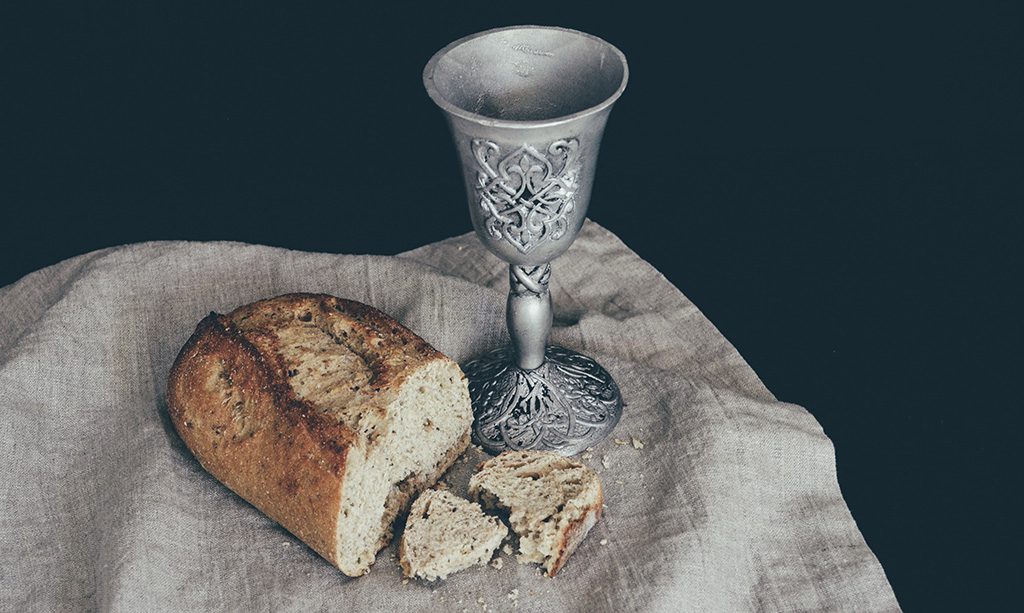
The bread and the cup are solemn declarations of His suffering, His body broken, and His blood poured out for the forgiveness of sins. In the same manner, we take the cup after the bread, just as Jesus instructed, preserving the significance of His death and proclaiming it until He comes again.
Through this understanding, we see that there is a testimony to the Gospel—past, present, and future. It’s not just for today or for yesterday. It’s not something we do with only a somber heart; there is a celebration in it. There is a victory in it—a victory we get to participate in and receive together.
Misusing the Lord’s Supper: A Warning from Corinthians 11:18-34
While the Lord’s Supper is a sacred institution that commemorates the death and resurrection of Jesus Christ, connecting us to both the past and the hope of the future, 1 Corinthians 11:18-34 contains a stern warning from Paul to the Corinthian believers about the dangers of misusing this holy practice.
When the church gathers, it is not merely to partake in the sacred feast, but to engage in worship and fellowship. The Lord’s Supper is a time for unity and togetherness, not for individualism. Unfortunately, the Corinthian believers were eating and drinking in an unworthy manner, with some going hungry while others became drunk.
This behavior not only misused the Lord’s Supper but also showed a blatant disregard for the body and blood of the Lord. Paul warns that those who partake in the sacred feast in an unworthy manner are guilty of sinning against the body and blood of the Lord. The phrase “eats and drinks judgment to himself” (1 Corinthians 11:29) highlights the spiritual consequences of such behavior.
The Importance of Self-Examination During the Sacred Feast
The concept of self-examination is crucial in the context of Communion. Paul proclaims, “let a man examine himself” (1 Corinthians 11:28), calling believers to a time of introspection. We are urged to consider our relationship with God and others, ensuring we are not guilty of sinning against the body and blood of the Lord.
Paul warns that we must not eat and drink in an unworthy manner, emphasizing the importance of self-reflection before participating in this sacred feast.
As Pastor Lucas highlighted, Paul’s warning points to a deeper significance: “If you understand that this represents the body and blood of Jesus, broken and poured out for you, but you take it without acknowledging that or recognizing its meaning, you risk drinking judgment upon yourself. If you participate in Communion just because others are, or for the sake of tradition, without belief or reverence, you miss the very essence of what this act symbolizes.”
A Renewed Identity in Christ
When we break the bread and drink, we are reminded not only of Christ’s sacrifice but also of who we are because of it. Through His body and blood, we have been made new (2 Corinthians 5:17). It is crucial to discern the Lord’s body to fully grasp the spiritual significance and avoid partaking in an unworthy manner.
Each time we receive the sacred feast, we reaffirm our identity as redeemed, forgiven, and restored children of God. If we simply take the cup without recognizing its true meaning, it becomes nothing more than a weekly reminder of our sin. It’s a reminder of our shortcomings, rather than a reflection on the perfect sacrifice of Christ that purchased our redemption and righteousness.
When we fail to acknowledge the body and blood as the ultimate sacrifice, we only grasp part of its significance. In doing so, we miss the full examination of ourselves in light of Christ’s sacrifice. Receiving the bread and drink during the sacred feast becomes a moment of self-pity or self-focus, rather than a celebration of the transformation Christ has brought to our lives.
One Body Together as a Church of God
The sacred feast is more than just an individual act of faith—it is a shared experience at church that unites believers as one body in Christ. This deep sense of community is beautifully expressed in 1 Corinthians 10:16-17:
“Is not the cup of thanksgiving for which we give thanks a participation in the blood of Christ? And is not the bread that we break a participation in the body of Christ? Because there is one loaf, we, who are many, are one body, for we all share the one loaf.” (1 Corinthians 10:16-17, NIV)
God calls upon us to come together to eat and drink not only as an act of personal devotion but as a sign of our unity in Christ. When we partake in the sacred feast, we affirm that we are not alone in our faith—we are members of a greater body, joined together by the sacrifice of Jesus. This eating of the bread is a reminder that Christianity is not meant to be lived in isolation, but in communion with others.
Paul warns against eating our ‘own supper‘ ahead of others, turning the sacred feast into a self-centered act rather than a shared experience. In 1 Corinthians 11:20-21, he rebukes those in the early church who were approaching the sacred feast in a divisive and selfish manner, saying, “When you come together, it is not the Lord’s Supper you eat, for when you are eating, some of you go ahead with your own private suppers.” This misuse of the Lord’s Supper distorted its purpose, as some treated it as an opportunity to indulge rather than to remember and proclaim Christ’s sacrifice.
The Heart of Communion: A Call to Action
As Pastor Lucas explored in this three-part sermon series, the heart of Communion is a sacred invitation to remember, proclaim, and examine our hearts before Jesus. While the theological practice of the Lord’s Supper may differ across Christian traditions, in the same way, it universally commemorates Jesus’ sacrifice and fosters a sense of community among believers as they share in the bread and the cup.
Therefore, the Eucharist is not just a reflection on Christ’s sacrifice—it is a call to action. Grace is not passive; it compels us to live in response to the love we’ve received. As we partake in the bread and the cup, we are invited to remember Christ’s death and to live in the light of His resurrection, embodying His sacrifice daily and reflecting His love, forgiveness, and unity in our actions.
When we approach the sacraments as acts of faith, we open ourselves to their transformative power, allowing them to shape and strengthen our lives, deepening our connection with Christ and one another.
As you reflect on the sacred feast, consider this: How does remembering Christ’s sacrifice shape your heart and life?
Sermon Notes:
The Table of Grace, Part 3
Key Passage: 1 Corinthians 11:18-34
Remembrance of Christ’s Sacrifice
- 1 Corinthians 11:24-25: “This is My body… Do this in remembrance of Me.”
Proclaiming Christ’s Death
- 1 Corinthians 11:26: “For whenever you eat this bread and drink this cup, you proclaim the Lord’s death until He comes.”
Future Hope in Christ’s Return
- Key passage “until He comes” as a promise of Christ’s return.
Self-examination
- Key Passage 1 Corinthians 11:28: “Everyone ought to examine themselves before they eat of the bread and drink from the cup.”
Community/One Body
• Key Passage – 1 Corinthians 10:16-17, also see The Message Bible